K2-to-P1 Chinese readiness means building confidence with everyday listening, speaking, books and early writing. Start with familiar situations and notice what your child can do with a little support. A child who needs help in one area has a useful next practice step—not a pass or fail result.
MOE explains that children do not need to read, speak or write in their Mother Tongue Language to enter P1. Its preschool-to-primary transition Parent Kit encourages interest, simple instructions and simple questions. Use the activities below to notice and support learning, without treating them as admission requirements.
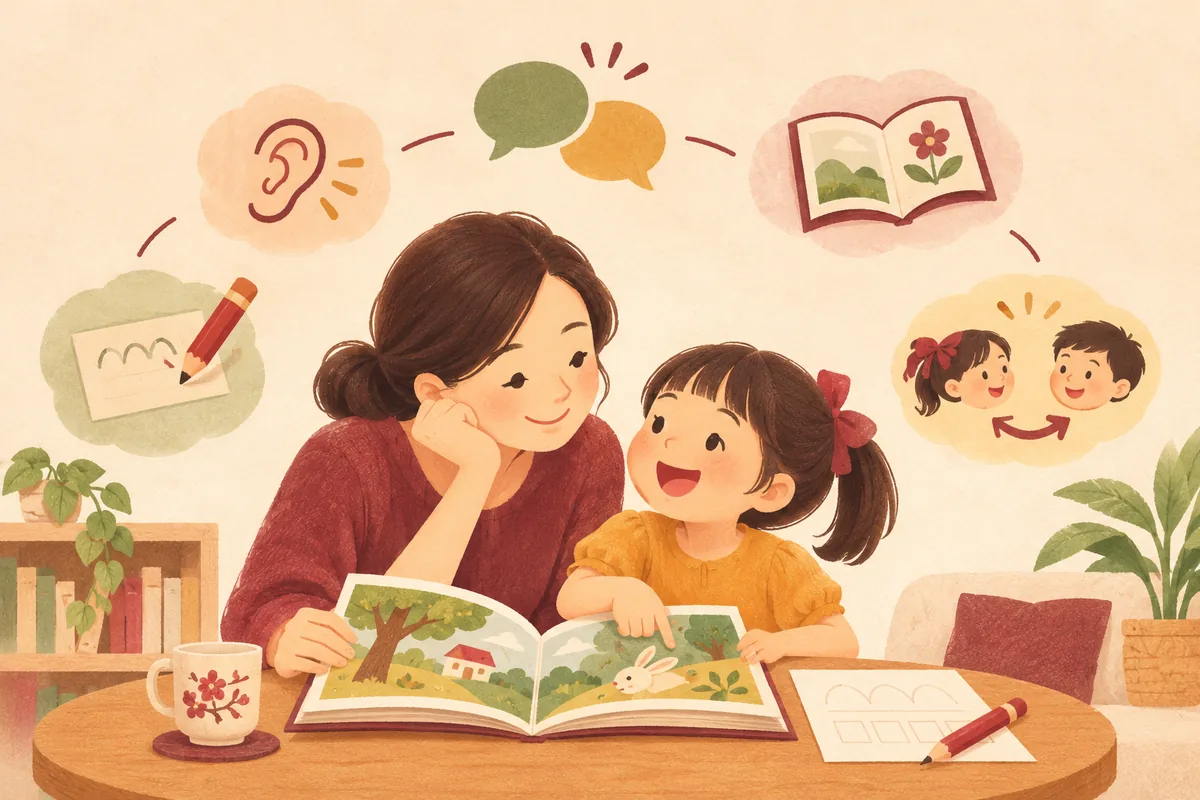
How to use this checklist
Choose two or three activities for a relaxed session. Let your child answer first, then model a short response if needed. Record “comfortable”, “with help” or “try again another day”. There is no required score or fixed number of characters to know.
Listening: follow a familiar instruction
- Ask your child to put a book on the table or bring a familiar object.
- Try a short two-part instruction only when the first step is comfortable.
- Ask what happened in a short story, using pictures for support.
For example, say “请把书放在桌上。” Point to the book and table if needed, then try again without pointing on another day.
Speaking: tell someone about an experience
- Name familiar people, food or activities in Chinese.
- Answer a simple question about what happened today.
- Describe one picture, then add what happened next.
Try “今天你和谁一起玩?” If your child gives one word, expand it into a sentence together. Allow thinking time and respond to the meaning before correcting every word.
Books and words: make meaning together
- Choose a picture book your child wants to hear again.
- Talk about a character’s action and feeling.
- Notice a familiar character in a book, sign or label.
Read the same short passage again rather than turning each page into a word test. Ask your child to point to a clue for an answer. Explore HAO’s free Chinese learning resources for optional character practice.
Early writing: practise with a clear purpose
- Hold and use a pencil comfortably for a brief activity.
- Copy a familiar stroke or character while noticing its position.
- Talk about the meaning of a word before writing it.
Use a few careful attempts instead of repeated pages. Stop if your child becomes tired or uncomfortable. Avoid treating handwriting speed as a measure of understanding.
Learning routines: ask for help and take turns
- Practise a simple way to ask for help, such as “请再说一次。”
- Take turns describing pictures or asking questions.
- Put materials away together after the activity.
A simple parent observation sheet
Choose the description that fits today. Revisit a familiar activity another day; this sheet has no total score.
| Area | An activity to notice | Today’s observation |
|---|---|---|
| Listening | Follow a familiar one-step instruction. | ☐ Comfortable ☐ With help ☐ Try another day |
| Speaking | Share one idea about the day. | ☐ Comfortable ☐ With help ☐ Try another day |
| Books and words | Talk about a picture or familiar character. | ☐ Comfortable ☐ With help ☐ Try another day |
| Early writing | Try a few careful strokes or a familiar character. | ☐ Comfortable ☐ With help ☐ Try another day |
| Learning routines | Ask for repetition or take turns. | ☐ Comfortable ☐ With help ☐ Try another day |
If you discuss progress with a teacher, bring an example of an activity your child enjoyed and one that needed support. Ask what to practise next rather than using the checklist to assign a level.
A small weekly routine
On one day, share a picture book. On another, retell a family outing using three pictures or photos. On a third, practise a few meaningful characters. Keep the routine flexible: enjoyment and regular opportunities to use Chinese matter more than completing every item at once.
When should parents consider a class?
Consider what support your child needs: more chances to speak, a structured reading routine, early writing practice or a gentle transition to primary learning. Ask how a class responds when a child needs more time, and confirm the current timetable and availability with the centre.
HAO’s Preschool Early Literacy Foundation programme serves N1–K2. The Primary All-in-One Chinese Programme serves P1–P6. Compare the programmes, find one of HAO’s six centres or enquire about a free trial.