Starting Mandarin early gives children a real advantage in Singapore’s bilingual education system. Preschool Chinese enrichment introduces young learners aged 3 to 6 to the language during their most receptive years — when the brain absorbs new sounds and vocabulary with remarkable ease. Rather than formal lessons, quality programmes use play, songs, and stories to build genuine language skills.
Children who attend preschool Chinese enrichment in Singapore enter primary school with stronger foundations, greater confidence, and a positive relationship with Mandarin. Here are five key ways early enrichment develops strong language skills in young children.
Key Takeaways
- Ages 3-6 represent the ideal window for language acquisition
- Play-based learning builds vocabulary naturally without pressure
- Phonetics training (Hanyu Pinyin) prepares children for reading
- Bilingual learning strengthens memory and problem-solving skills
- Structured enrichment outperforms passive exposure at home
1. Builds Oral Fluency Through Play-Based Learning
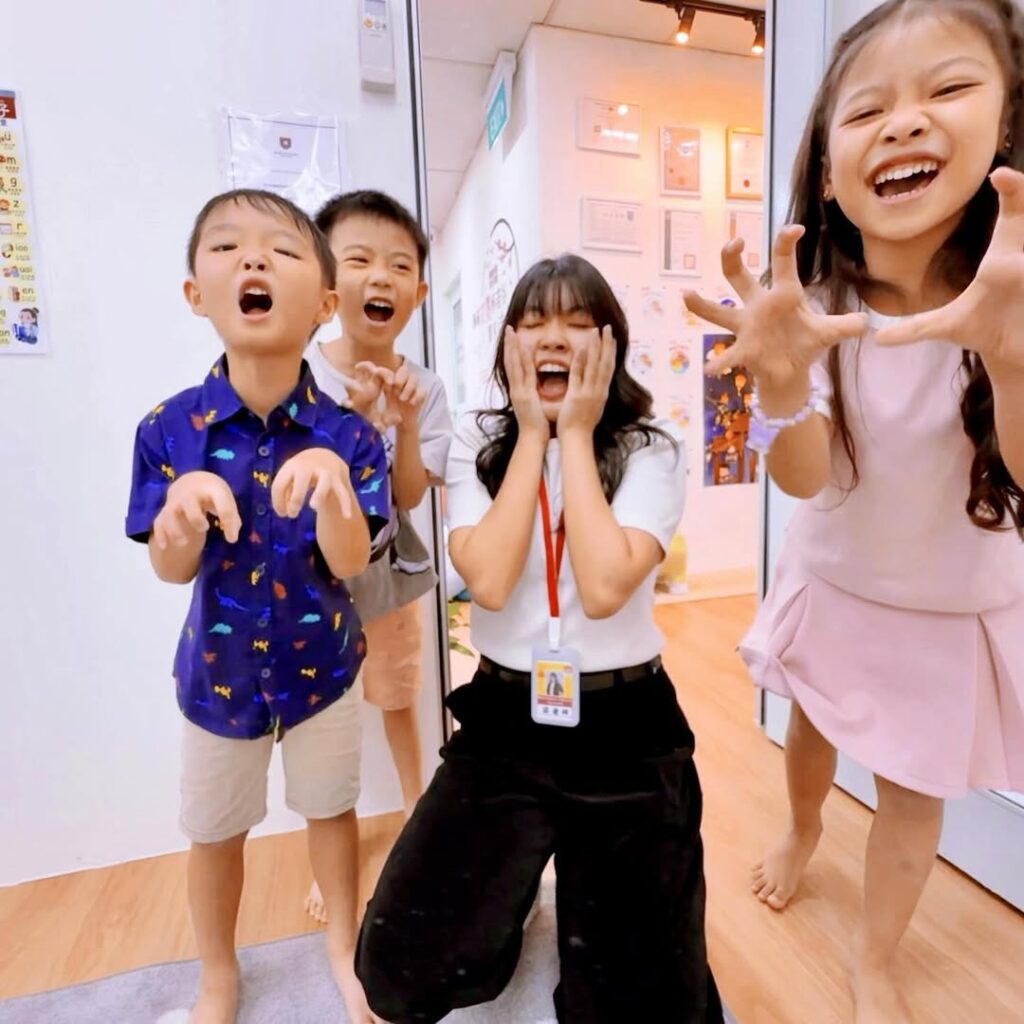
Young children learn through play, not textbooks. A well-designed Chinese enrichment class for preschool learners uses interactive activities that feel like fun rather than formal instruction.
Common play-based methods include:
- Mandarin songs and nursery rhymes
- Storytelling with picture books and puppets
- Role-playing everyday scenarios
- Movement games reinforcing vocabulary
This approach builds listening and speaking skills first — the natural order of language acquisition. Children develop the confidence to express themselves in Mandarin before tackling reading and writing.
Small class sizes of 6-8 students ensure every child gets opportunities to speak and receive gentle correction. This personalised attention accelerates oral development far more effectively than passive exposure at home.
2. Develops Phonetics Mastery with Hanyu Pinyin
Mandarin’s four tones can change a word’s meaning entirely. Early phonetics training helps children hear and reproduce these tones accurately — something that becomes harder with age.
Preschool Chinese enrichment in Singapore typically introduces Hanyu Pinyin through:
| Skill | Teaching Method |
| Tone recognition | Listening games and repetition |
| Pronunciation | Songs, chants, and rhymes |
| Sound-letter connection | Flashcards and matching games |
| Pinyin reading | Simple word decoding activities |
Mastering Pinyin early provides a powerful tool for independent learning. When children encounter unfamiliar words later, they can decode pronunciation themselves rather than relying entirely on memorisation.
This skill also prepares them for digital communication, as Pinyin is used for Chinese typing on phones and computers.
3. Introduces Early Character Recognition Without Pressure
Writing Chinese characters requires fine motor skills that preschoolers are still developing. Quality programmes focus on visual familiarity rather than stroke-perfect writing.
At this stage, children typically learn to:
- Recognise high-frequency characters (numbers, colours, family members)
- Understand basic stroke order through tracing
- Match characters to pictures and meanings
- Identify their own name in Chinese
This gentle exposure builds reading readiness without the stress of assessments. Children develop curiosity about characters rather than anxiety, setting a positive tone for formal learning later. A good Chinese enrichment class for preschool children balances character exposure with oral practice, ensuring neither skill is neglected.
4. Strengthens Cognitive Skills Beyond Language
Learning Mandarin exercises the brain in ways that benefit all areas of development. Research from the Encyclopedia on Early Childhood Development shows that bilingual children aged 4-8 outperform monolinguals on tasks requiring attention control and mental flexibility.
Cognitive benefits of early Mandarin learning include:
| Benefit | How It Develops |
| Improved memory | Retaining vocabulary and tonal patterns |
| Problem-solving skills | Managing two language systems |
| Attention control | Focusing on relevant sounds and meanings |
| Cognitive flexibility | Switching between languages and contexts |
Mandarin’s tonal nature adds extra cognitive training. Distinguishing between tones sharpens auditory processing — a skill that supports music, reading, and general learning.
These benefits extend well beyond language. Children who attend preschool Chinese enrichment in Singapore often show improvements in concentration and reasoning across all subjects.
5. Prepares Children for Primary School Success
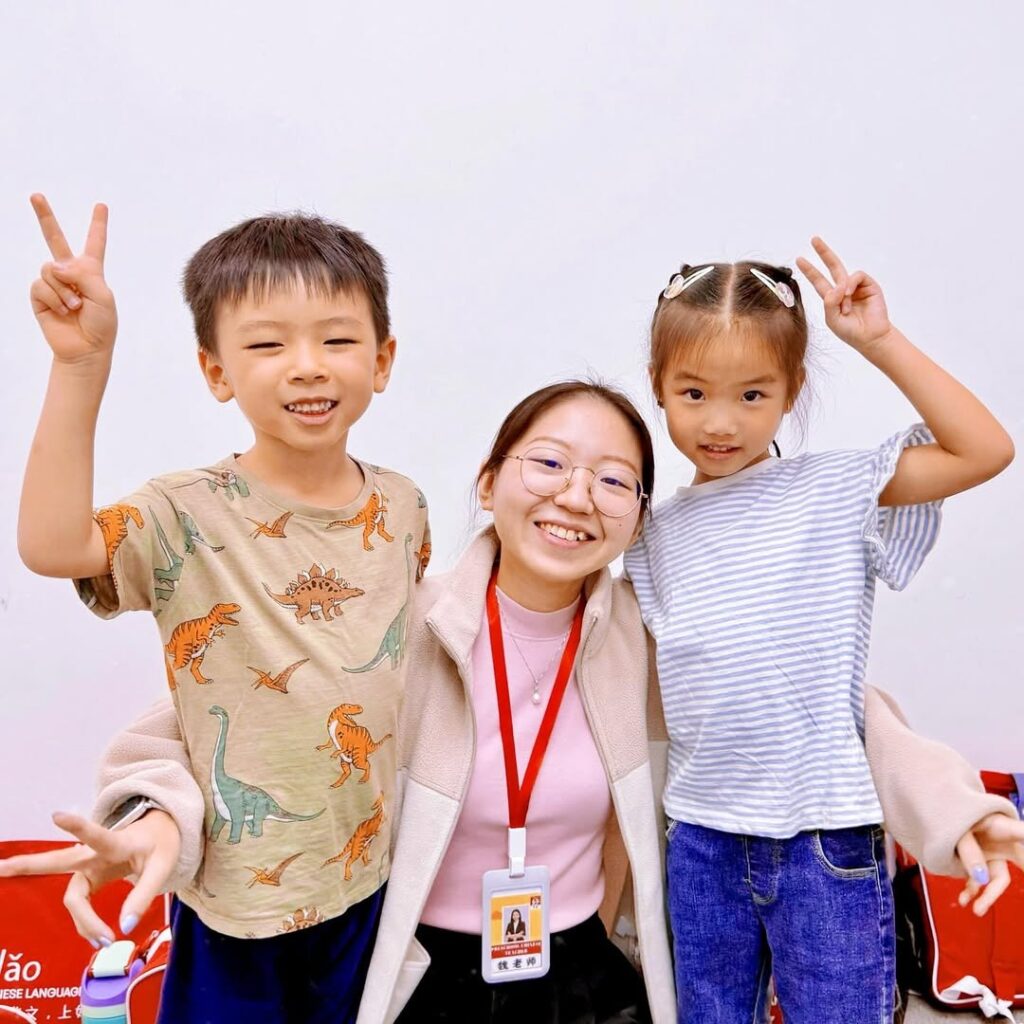
The transition to Primary 1 can be challenging, especially for Chinese language. Children without prior exposure often struggle with the MOE syllabus demands from day one.
Preschool Chinese enrichment bridges this gap by building:
- Vocabulary foundation: Words aligned with the lower primary syllabus
- Phonetics knowledge: Hanyu Pinyin for reading and spelling
- Listening comprehension: Understanding spoken instructions
- Speaking confidence: Willingness to participate in class
- Cultural awareness: Appreciation for Chinese traditions and values
Children who enter Primary 1 with these foundations spend less time catching up and more time excelling. They approach Chinese lessons with confidence rather than fear.
How Hao Chinese Tuition Supports Early Mandarin Development

At Hao Chinese Tuition, we specialise in preschool Chinese enrichment in Singapore through our dedicated N1-K2 programme. Our approach ensures children build strong foundations while genuinely enjoying the learning process.
The ELF (Early Literacy Focus) Method
Our proprietary ELF method covers four essential pillars:
- Chinese Phonetics: Accurate Hanyu Pinyin pronunciation
- Vocabulary Building: Words matched to MOE expectations
- Writing Readiness: Stroke order and basic character formation
- Public Speaking: Confidence through speech and drama activities
What Makes Us Different
| Feature | Benefit |
| MOE-registered instructors | Qualified educators who understand the syllabus |
| Small class sizes | Personalised attention for every child |
| Native Mandarin speakers | Accurate pronunciation modelling |
| Progress tracking | Regular updates for parents |
Our teachers combine language expertise with early childhood training, ensuring lessons are both effective and age-appropriate.
Explore our preschool programme or read about the long-term benefits of early Chinese lessons on our blog.
Signs Your Child Is Ready for Chinese Enrichment
Parents often wonder when to start. Most Chinese enrichment classes for preschool children accept learners from age 3.
Your child may be ready if they:
- Show curiosity about songs or stories
- Can follow simple instructions
- Enjoy activities with other children
- Demonstrate interest in communicating
Prior Mandarin exposure is not required. Programmes are designed for beginners and children from English-speaking households.
Frequently Asked Questions
What is the best age to start Chinese enrichment for preschoolers?
Ages 3 to 6 are ideal for starting Chinese enrichment. During this window, children absorb languages naturally and develop accurate pronunciation with far less effort than older learners. The brain forms neural pathways for language most efficiently before age six, making this the optimal period for Mandarin acquisition. Children in this age group have no ingrained fear of making mistakes, which allows them to experiment freely with new sounds and tones. Starting early also ensures they build a solid foundation before entering Primary 1, where MOE syllabus demands increase significantly. Even children from English-speaking households benefit greatly, as structured exposure during these years creates lasting language pathways.
How is preschool Chinese enrichment different from tuition?
Enrichment uses play-based methods to build language appreciation and foundational skills. Tuition focuses on exam preparation and is typically designed for older primary or secondary students facing assessments. In enrichment classes, children learn through songs, stories, games, and interactive activities rather than worksheets and drilling. The goal is to develop a love for the language and build oral fluency before formal reading and writing begin. There are no stressful tests or grades — progress is measured through participation and skill development. This approach creates positive associations with Mandarin, setting children up for long-term success when they eventually transition to more structured tuition.
Will my child feel pressured in class?
Quality programmes prioritise fun and engagement over academic pressure. Activities include songs, games, role-playing, and storytelling — helping children associate Mandarin with enjoyment rather than stress. Teachers are trained in early childhood education and understand how young learners develop best through play. Class sizes are kept small, typically 6-8 students, so every child receives individual attention without feeling singled out. There are no formal exams or assessments that might create anxiety for young learners. Children are encouraged to participate at their own pace, building confidence gradually in a supportive and nurturing environment.
Give Your Child a Strong Start in Mandarin
Preschool Chinese enrichment builds the foundation for academic success and cultural connection. At Hao Chinese Tuition, our experienced educators and proven ELF method help young learners develop confidence, fluency, and a genuine love for Chinese.
Enrol your child today:
- Email: [email protected]
- Phone: +65 8626 7300 | 9874 1183
Visit us at:
- 501 Balestier Road, #02-01, Wai Wing Centre, Singapore 329844
- BLK 744 Bedok Reservoir Rd, #01-3065 (2nd storey), Singapore 470744
Follow us on Instagram: @haochinesetuitionExplore our Primary School programme or Han Yu Pin Yin class to continue your child’s Mandarin journey.